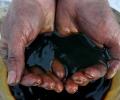
Notwithstanding the robust turnaround in the financial performance for the June quarter (Q1FY24), stocks of state-run oil marketing companies have been in a downtrend in the last month. The fall comes on a rise in crude oil prices that have surged to a 7-month high of $88 a barrel. A busy political calendar in the months ahead that may see the government keep a lid on auto fuel prices is also a dampener, analysts said. Shares of Hindustan Petroleum (HPCL), Bharat Petroleum (BPCL) and Indian Oil (IOC) have shed 9-11 per cent since their respective earnings announcement between July 26 to August 4.

As oil marketing companies (OMCs) stare at huge under-recoveries, India is facing fuel shortage across the country with states like Rajasthan, Madhya Pradesh, Karnataka Uttarakhand, Gujarat and Haryana being the worst hit. The under-recoveries suffered by OMCs are around Rs 20-25 a litre for diesel and Rs 14-18 a litre for petrol, said sources. Government and state-run companies denied reports of any crisis or supply-side issues on the availability of fuel.

The slowdown in corporate revenue growth over the last one year has begun to reflect in India Inc's capital expenditure, or capex. The country's top listed companies are going slow on fresh investment in capacity expansion, in line with a deceleration in their top line growth. The combined fixed assets of the listed companies, excluding banking, finance services and insurance (BFSI) and the government-owned oil & gas firms, were up 10.1 per cent year-on-year (Y-o-Y) during April-September 2023 (H1FY24) - the slowest in 18 months - as against 21.1 per cent Y-o-Y growth in H2FY23 (October 2022-March 2023) and 11.6 per cent growth in the April-September 2022 period (H1FY23).

India's plan to produce ethanol from second-generation (2G) sources -- mainly farm waste -- is taking time to materialise even as the government is set to dedicate to the nation on Wednesday a Rs 900-crore plant set up by Indian Oil Corporation (IOC) in Panipat. Though state-run oil companies had decided to set up at least 12 plants in 2016-17 with an investment of around Rs 10,000 crore, this will be the first unit coming on track while others are stuck in various stages owing to issues like capital expenditure, lack of feedstock, and high rates of finished products compared to traditional ethanol units. According to industry sources, three more second-generation plants are coming up.

After Indian Oil Corporation, state-run Bharat Petroleum Corporation is planning to take over petrol stations in Sri Lanka, company chairman and managing director S Behuria said on Friday.
A refiner embarking on an alternative fuel strategy may end up selling bottled water to quench the thirst of millions.

The divestment process, however, will not be an easy affair as there are multiple stakeholders, including the employee unions, whose concerns will have to be addressed.

Shell India, the domestic arm of Royal Dutch Shell Plc, had offered for sale 20 of its 80 operational retail outlets and around 20 sites acquired earlier for setting up such outlets.
Mittal is in talks to take 20 per cent stake in state-run Bharat Petroleum Corp Ltd's Rs 9,100 crore (Rs 91 billion), six million tons a year Bina refinery that is to be commissioned by 2010-11, industry sources said.

India will need to travel back in time and seek inspiration from football greats Tulsidas Balaram and Chuni Goswami to deftly dribble around and sidestep the West-imposed price cap on exports of Russian seaborne crude oil. India depends on imported oil to meet 86 per cent of its needs, of which nearly a quarter now comes from Russia. The copious flows are roughly 10 per cent cheaper than competing suppliers helping India save billions of dollars in fuel costs.
Sri Lanka on Monday put off indefinitely a decision to sell off part of the state-run oil company to Bharat Petroleum as trade unions threatened to stop work, triggering panic buying at petrol stations across the country.
The divestment ministry said on Thursday that the inter-ministerial group on the divestment of Bharat Petroleum Corporation would meet next week to discuss the quantum of shares to be offered in the domestic and global markets.
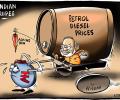
What could be more uncertain than Virat Kohli's agonising wait for a century for over two years? Perhaps it's what you will pay tomorrow morning to fill your vehicle's tank. Pump prices have joined cricket scores as the country's favourite discussion topic. Steep increases invite widespread protests, while moderate additions make the government anti-reformist. The ongoing fuel price conundrum is no different.
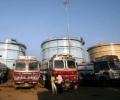
The tankers carrying fuel from terminals to dealer outlets would not just have global positioning system (GPS) tracking but also an electronic key (e-key).
A recent survey by Harvard Business Publishing, where 24 companies have been interviewed, says gaps in an organisation's leadership pipeline have emerged as the biggest human resource (HR) challenge.
A few years ago, when top officials of Indian state-run refiners went to Dubai to negotiate a crude oil supply contract, a senior official from state-owned Saudi Aramco told them, "We can negotiate on anything, but I am the last man standing for you. "Nobody can offer the range of crudes we do with certainty," an official who was part of the negotiating team recalls. Perhaps that explains why Saudi Arabia is less concerned about losing its place as India's premier oil supplier to an upstart like Russia, which emerged from nowhere to become India's biggest crude oil supplier in September and October.

The government has been pressing citizens to pay taxes and be compliant, but they have very little to show regarding improved efficiencies in the companies they themselves own, the fund managers said.
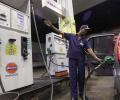
Petrol and diesel prices were hiked by 80 paise a litre each on Wednesday, taking the total increase in rates in 16 days to Rs 10 per litre.

India may see a structural shift in supplies of crude oil with Russia emerging as a key source of fuels, a development that reduces New Delhi's dependence on West Asian oil, gives Indian refiners better bargaining power with price-setter Saudi Arabia, and improves overall energy security. The unexpected surge in supplies of Russian crude in the last few months, unthinkable until the war in Ukraine, may also deliver other unforeseen gains such as boosting exports of refined fuels to Europe, which historically has counted on Russian shipments. India has jumped on to the bandwagon of opportunistic buying of Russian crude but if calibrated carefully, Urals crude can be a long-term asset for India refiners.

OMCs' Digital India move is likely to have an impact on more than 80.3 million Pradhan Mantri Ujjwala Yojana consumers, majority of whom are not exposed to digital transact.

Many believe that marketing budgets could be a hurdle.
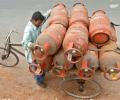
A shortfall in LPG supply from Aramco has led to huge booking backlog across states. To meet the backlog, India has asked Abu Dhabi National Oil Company for two additional cargos of LPG, but that may take another 10 days to reach.
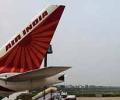
"Air India is unable to pay even after a 90-day credit period. They owe us about Rs 300 crore without interest. There is also no bank guarantee from Air India to any of the oil marketing companies. We do not know when will the company honour its dues," said a BPCL official on condition of anonymity.

Justice Markandey Katju recused himself from the matter saying his wife held shares of Reliance Industries.
The State-run Oil India Ltd will raise its stake in Numaligarh Refinery Ltd to 26 per cent to strengthen its position as an integrated oil company.
After GAIL, Indian Oil Corp has expressed interest in buying out Asian Development Bank's 5.2 per cent stake in Petronet LNG Ltd, company chairman Sarthak Behuria said. However, if the state-run promoters of Petronet are not allowed to raise stake in the company for fear of it becoming a public sector unit, Behuria suggested selling ADB's shareholding to the public.

Investor sentiment got a big push after Brent crude, the international benchmark, dropped below the USD 73-mark to quote at a seven-month low of USD 72.65 by falling 3.48 per cent, traders said.

State-run retailers IOC, BPCL and HPCL may lose about Rs 45,000 crore (Rs 450 billion) on selling auto and cooking fuels below cost this fiscal, two-third of which will be compensated by the government by issuing bonds.
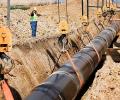
While previously selling of the marketing business, possibly to another state-owned firm, was being considered, the government is now mulling on hiving off the pipelines into a separate entity and selling off a majority stake in it.
Since May 1, the dynamic fuel pricing model has been applied on a pilot basis in 5 cities

Referring to Modi, Adityanath and Union Home Minister Amit Shah as 'outsiders', the farmer leader said he has no objection if they become prime ministers after winning polls from Uttarakhand or Gujarat.

Revenue from divestment has fetched Rs 40,000-50,000 crore against target of Rs 2.10 trillion.
Reliance Industries Ltd is seeking export-oriented unit status from the government for its existing 33 million tonne per annum refinery in Jamnagar.
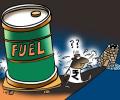
If the reforms are implemented, multi-brand retail majors such as Future Group and Reliance Retail might enter the fuel retail space.
The Indian government has lifted the ban on setting up of petrol pumps and cooking gas agencies by allowing state-run oil firms to appoint dealers on their own.

Lines up a $1-billion capital expenditure plan for exploration purposes abroad.

Oil firms' borrowings could fall by up to Rs 15,000 cr, govt's subsidy bill by 12% .

Top losers in the Sensex pack include Bharti Airtel, Infosys, Asian Paints, RIL, Coal India, HDFC Bank, HDFC, TCS, ONGC and M&M, falling up to 3.09 per cent.

The broader NSE Nifty too fell below the 10,100 level by dropping 100.10 points to end at 10,094.25
 © 2026 Rediff.com - Advertise with us - Disclaimer - Privacy Policy - Sitemap - Feedback - About us - Terms of use - Grievances